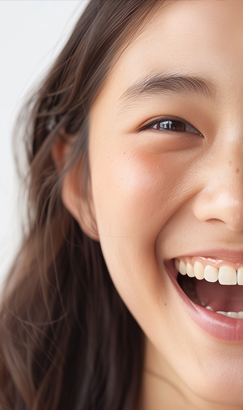
Upper lip, chin, jawline, sideburns. The area where hormones write the rules — and where we are most careful.
Facial work at Laser Me covers the upper lip, chin, jawline, sideburns and cheeks. The individual areas are tiny — an upper lip is a treatment measured in seconds, not minutes — and the emotional weight is out of all proportion to the square inches involved. Nobody schedules a consultation because their chin hair is inconvenient. They schedule it because they have been checking their jawline in the rear-view mirror at red lights for two years, plucking in the car, and quietly dreading somebody noticing.
So we will start with the useful part rather than the reassuring part. The face is the area where laser hair reduction is most likely to work well and most likely to need ongoing maintenance, and both halves of that sentence are true at once. Understanding why is the difference between a client who is delighted at month eighteen and one who feels misled.
Most clients need 6 to 8 sessions spaced 4 to 6 weeks apart for a facial area, and facial hair frequently cycles faster than body hair, so the intervals here often sit at the shorter end — four weeks rather than six. Results vary with hair colour, skin tone and hormones, and on the face that last word is doing more work than it does anywhere else on you.
Chin and jawline hair on a woman is androgen-dependent. That is the single most important fact on this page. Androgens instruct follicles in that region to switch from producing fine, invisible hair to producing coarse, dark, terminal hair — and crucially, the number of follicles capable of making that switch is far larger than the number currently doing it.
A laser can only affect a follicle that is currently growing a pigmented hair. A follicle that is dormant, or one still producing pale vellus hair, is invisible to the treatment. It is not that we miss it — there is nothing there to find. So when your hormonal picture shifts, follicles that were never treated because they were never active can be switched on, and coarse hair can appear where none was before. Perimenopause does this. PCOS does this. Thyroid conditions do it, pregnancy does it, and so do a number of medications.
This is not the treatment failing and it is not your provider having done a poor job. It is a new group of follicles entering the game after the whistle. It is also exactly why the FDA-cleared language for this category of device is permanent hair reduction rather than permanent hair removal, and why any clinic promising you a permanently finished chin is telling you something it cannot know. What is honest: most clients finish a facial series with substantially less hair, what returns is typically finer and lighter, and many keep a maintenance session on the calendar once or twice a year. On the face, more clients need that maintenance than on any other area we treat. We would rather you hear that from us in month zero.
One more thing worth saying plainly: if coarse facial hair has appeared relatively suddenly, or arrived alongside other changes, that is a conversation to have with a physician, not a laser clinic. We treat hair. We do not diagnose why it is there, and a good consultation says so.

Your face grows two entirely different things and they respond entirely differently, which is why a single answer to “does it work on faces” does not exist.
The dark, coarse, wiry chin hairs — the ones you tweeze — are terminal hairs. They are thick, pigment-rich and deeply anchored, which makes them a strong target for the GentleMax Pro. Those are the hairs the treatment is genuinely good at.
The soft, pale, downy fuzz on your cheeks is vellus hair, and it carries very little melanin. There is not enough pigment in it to absorb meaningful energy, so it does not respond well, and turning the power up on a target that will not absorb it endangers your skin without touching the hair. If what bothers you is cheek fuzz rather than chin hair, we will tell you at the consultation that this is not your treatment. Some people are relieved. Some are disappointed. Everyone is better off knowing.
There is an uncommon but genuinely documented phenomenon called paradoxical hypertrichosis: instead of reducing hair, treatment stimulates finer hair in or immediately around the treated area to grow in coarser. It is reported most often on the face and neck, and the reports skew toward women with darker skin tones. It is not common, and it is not a reason to avoid facial treatment. But it is real, it is in the literature, and it is exactly the kind of thing that gets left off a page like this one, which is precisely why we are putting it on ours.
Two things follow from it. First, if you notice new coarse hair appearing around a treated area, tell your provider rather than assuming you imagined it — treatment settings and approach are things that get adjusted, and a provider who has done this for twenty years has seen it before. Second, it is one of several reasons that the person holding the handpiece matters more than the brand name on the machine. The face is where wavelength selection, energy settings and skin assessment are least forgiving, and where the difference between a trained provider and a discount groupon is not theoretical.
And the same pigment rule that governs the rest of the body governs the face, with one especially common wrinkle: grey and white hair. If your chin hairs have gone grey — which happens to a great many women exactly when chin hairs start appearing in the first place — there is essentially no melanin left in them. That absence of pigment is what makes them grey. No target means no heat means no result, at any setting. This is the most frequent honest “no” we deliver at facial consultations, and we deliver it rather than sell a package that will not work. Blonde and red hair carry the same problem for the same reason. Our full walkthrough is on am I a candidate.
Retinol, tretinoin and similar actives thin the top layer of skin and raise sensitivity. Most clients stop them roughly five to seven days before a facial session and resume once the skin has settled. Check with your provider — this depends on what you are using and how often.
No makeup, no SPF, no moisturiser, no serum on the treatment area. Product sitting on the skin where energy is about to be delivered is a variable nobody needs. Come as you are; there is a mirror on the way out.
Four weeks, and this is the hardest instruction we give anyone. Tweezing, threading and waxing pull the hair out of the follicle — which removes the exact target we are aiming at. You may trim or shave. Yes, shaving your chin is allowed, and no, it does not make it grow back thicker.
Freshly treated facial skin needs protecting, and unlike your legs your face cannot hide under denim. Daily SPF is not optional during a facial series — and a fresh tan before a session narrows the gap between hair pigment and skin pigment that the whole treatment depends on.
Expect the treated area to be pink and slightly warm for a few hours, occasionally with small bumps around the follicles. It is your face, so plan accordingly — do not book the afternoon before a wedding. Give yourself a week of buffer before anything photographed. In the week or two after, hairs will appear to grow: they are shedding, not growing. Treated follicles push the damaged shaft out and it looks identical to regrowth until it wipes away.
Every other area on this site comes with the same seasonal advice: start in the fall, when your skin has been under sleeves for months and the sun is weak. That advice is real and it is physics — tanned skin narrows the gap the treatment relies on.
Your face does not get a winter. It is exposed in January when you are scraping the windshield and it is exposed in July on a patio, and there is no version of a St. Louis year where your face is covered for four months. That changes the advice rather than repeating it. For the face, the seasonal question is not “when do I start” — you can start any time — it is “how disciplined am I about SPF while I am in a series.” A client who wears sunscreen daily can be treated year-round without much drama. A client who spends a Missouri August outdoors without it will arrive to sessions with skin that is a different colour than it was at the consultation, and their provider will treat more conservatively or reschedule. That is not obstruction. It is the same caution that keeps this treatment safe.
Laser Me has been doing this in St. Louis since 2000 — a mother-and-daughter practice, more than 10,000 clients, over 100,000 treatments performed. The face is where twenty years of judgement is worth the most and where we say “no” most often. If you are weighing options, the full list is on our treatment areas page; underarms is a far simpler place to start, and Brazilian shares the hormonal story this page tells.