Treatment Areas · St. Louis

Leg Laser HairRemoval

The biggest area, the longest sessions, and the most hours of your life handed back.

The Short Answer

Full leg, or just the lower half.

Legs are the largest surface we treat and the decision most people actually have to make is not whether, but how much. A lower leg package covers knee to ankle — the shins and calves, which is where the coarse, obvious, annoying hair lives for most people. A full leg adds the thighs. Plenty of clients do lower legs only and never feel the need to go further, because thigh hair on many people is fine and pale enough that nobody including them has ever noticed it.

That difference is not cosmetic preference — it is the whole technical story of this area, and it is why legs behave unlike anywhere else on the body. Your shins grow terminal hair: darker, coarser, pigment-rich, a genuinely good target for the GentleMax Pro. Your thighs frequently grow something much finer and lighter, closer to vellus hair, carrying far less of the melanin the laser needs to find. Same limb, two different responses. We would rather tell you that before you buy a full-leg package expecting the thighs to behave like the shins.

Most clients need 6 to 8 sessions spaced 4 to 6 weeks apart. Legs often sit at the upper end of that, and the interval frequently stretches later in the series — six weeks, then eight — for a reason worth understanding rather than resenting. Results vary with hair colour, skin tone and hormones.

Why It Takes Longer

Leg hair keeps a slower calendar.

A laser can only affect a follicle that is currently growing a pigmented hair. That is the constraint the entire treatment schedule is built around: follicles in the resting phase have no hair in them to heat, so they are invisible to the laser on the day you are on the table. You wait for a new cohort to rotate into growth, and you treat those.

The catch is that the rotation is not the same speed everywhere on the body. Leg follicles run a longer cycle than underarm or pubic follicles do, and a smaller share of them are actively growing at any given moment. That is not a flaw in the treatment and it is not you responding badly — it is regional biology, and it is well established. Practically it means two things. First, your legs will probably need more visits than your underarms did, and your friend who raved about her underarm results after three sessions is not comparing like with like. Second, spacing your later leg sessions further apart is often the right call rather than a scheduling failure, because coming in too early means treating an area where most follicles have not yet cycled back in and paying for a session that finds very little to do.

Trust the interval your provider gives you. It is derived from what your hair is actually doing between visits, and it is the difference between a series that works and a series that quietly wastes four appointments.

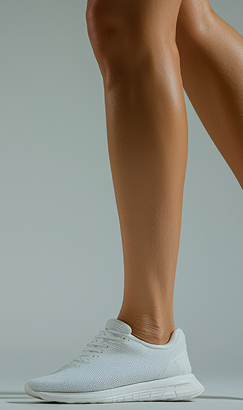
Lower leg and calf after a course of laser hair reduction at Laser Me in St. Louis
The Arithmetic

Hours, not minutes.

Legs are the area where the case makes itself, and it is not really about smoothness. It is about the shower. Shaving a pair of legs properly is a five-to-ten minute job done bent over in a slippery tub, and in a St. Louis summer most people are doing it every day or every other day. Add up a decade of that and you are looking at a meaningful fraction of a working month spent balancing on one foot with a razor.

Then there is what shaving actually does to shins. Skin over the tibia is thin and stretched over bone with essentially no cushion, which is exactly why that is where you nick yourself, why razor burn shows up there first, and why the backs of knees collect ingrown hairs — a curved, awkward, frequently-missed patch that you shave by feel. Reduce the number of hairs and you reduce the number of passes, and the skin stops being scraped every other morning.

A full-leg session is a real appointment — budget half an hour or more, unlike the few minutes an underarm takes. That is the trade. One long visit every month or two, against ten minutes a day for the rest of your life.

Straight Talk

Where it stings.

Calves & Thighs: Easy

Muscle underneath, decent padding, hair that is coarse but not extreme. Most clients find these the most forgiving parts of the whole body to treat — noticeably milder than a bikini and not in the same category as a Brazilian.

Shins: The Sharp Bit

Thin skin stretched directly over bone with nothing in between conducts sensation straight through. It is the sharpest part of a leg session, and it is also the shortest — a shin is a small strip and the handpiece moves quickly.

Cooling, Every Pulse

The GentleMax Pro fires a burst of cryogen onto the skin milliseconds before each pulse, chilling the surface while the energy is delivered below it. It is the main reason a leg session reads as a series of quick snaps rather than heat.

Afterwards, expect warmth and possibly some small pink bumps around the follicles for a few hours. Skip the sauna, the hot tub and a hard workout for about 48 hours. Then, over the following week or two, hairs will appear to grow — they are not growing, they are shedding. Treated follicles push the damaged shaft out and it looks exactly like regrowth until it wipes away. Keep shaving normally; shaving between sessions is encouraged, because it leaves the follicle and its pigment intact. Waxing, plucking and epilating creams are out for the entire series, because they remove the target from the follicle and leave the laser nothing to find.

Missouri Reality

The tan is the whole problem.

Legs are the area where St. Louis weather stops being background colour and becomes an actual constraint on your treatment plan, and it is worth understanding why rather than just being told to wait.

The treatment depends on a gap: pigment in the hair should absorb far more energy than pigment in the skin around it. That is what keeps the heat in the follicle and out of your epidermis. Darken the skin and you narrow the gap. A tan is, by definition, darkened skin. And legs are the part of you that spends a Missouri summer uncovered — shorts from May, a patio in Soulard, a weekend on the water at the Lake of the Ozarks, a stretch of the Katy Trail in July. Your underarms never see the sun and your bikini line rarely does. Your shins see all of it.

So the plan writes itself: start in the fall. Between October and February your legs are the colour they actually are, they have been under denim for months, and your provider can treat the skin in front of them rather than the skin plus a tan. Run the maths on six to eight sessions at four to six week intervals and a fall start puts you well through the series by the time shorts come back out. Starting in May means either treating tanned skin more conservatively or pausing mid-series, and neither is what you paid for.

Self-tanner counts, by the way. So does a spray tan. The laser cannot tell the difference between melanin you grew and colour you applied — both sit in the way. Come in with it fully washed off, and leave the lotion and oil off the legs that morning too.

The Honest Limits

What legs won’t fix.

Three things this treatment is regularly and incorrectly expected to do, and we would rather set them straight now.

It will not treat the bumps on the backs of your thighs. Those small rough goosebump-like bumps — keratosis pilaris — are a skin texture issue, not a hair issue. A hair laser targets pigment in hair. It does nothing for the texture, and anyone telling you otherwise is guessing on your behalf. Talk to a provider about what actually helps.

We cannot fire over a tattoo. Tattoo ink is exactly the kind of dense pigment this laser is designed to find and heat, and putting that energy into ink rather than a follicle is how you damage both the tattoo and the skin. If you have ink on your leg, your provider will work around it with a margin. That means a small patch of hair stays. It is not negotiable and it is not a technique problem — it is the same physics that makes the treatment work in the first place.

It will not work on hair without pigment. Blonde, red, grey and white hair carry little or none of the melanin these wavelengths absorb. Turning the energy up on a target that will not absorb it endangers your skin without helping your hair. Fine, pale thigh hair is where this bites most often on legs, and it is the single most common reason we tell someone to buy lower legs instead of full legs. That conversation costs us revenue. We have it anyway, and it is on our am I a candidate page in full.

And the word “permanent”: the FDA-cleared term is permanent hair reduction. It means a lasting decrease in the number of hairs that regrow after a completed series, with what returns typically finer and lighter — not that every follicle in the area is gone forever. Legs are less hormonally reactive than a Brazilian, so they tend to stay put more reliably, but many clients still keep an occasional maintenance session. Laser Me has been doing this in St. Louis since 2000: more than 10,000 clients and over 100,000 treatments performed. See the full list on our treatment areas page.

Common Questions

Frequently Asked

Leg follicles run a longer growth cycle, and a smaller share of them are actively growing at any one moment. Since the laser can only affect a follicle that currently has a pigmented hair in it, you are waiting for more rotations. Most clients need 6 to 8 sessions spaced 4 to 6 weeks apart, and legs frequently sit at the upper end with intervals that stretch later in the series.
It depends on your thighs. Shin and calf hair is usually terminal — darker, coarser and pigment-rich, which is what the laser responds to. Thigh hair is often much finer and lighter, carrying less of the melanin the treatment needs, so it responds less well. Plenty of clients treat lower legs only. Your provider will look at both and tell you honestly which is worth paying for.
Fall. A completed series is 6 to 8 sessions at 4 to 6 week intervals, so starting in October puts you well through it by the time shorts weather returns. It is also the practical window: your legs are the part of you a St. Louis summer actually tans, and tanned skin narrows the gap between hair pigment and skin pigment that the treatment depends on. Winter legs are the easiest legs to treat well.
No. Tattoo ink is dense pigment, and this laser is built to find and heat pigment — firing over ink risks damaging both the tattoo and the skin. Your provider works around it with a margin, which means a small patch of hair remains. That is physics rather than technique, and every reputable clinic will tell you the same thing.
Generally no. Calves and thighs have muscle and padding underneath and most clients find them among the most forgiving areas on the body. Shins are the exception — thin skin directly over bone conducts sensation straight through — but a shin is a small strip and it is over quickly. Cryogen cooling fires milliseconds before every pulse, which is why most people describe it as a snap rather than heat.
Legs
Your Transformation Begins

70% Off — First-Time Patients

See consultation for details. We’ll look at your shins and your thighs and tell you honestly which are worth treating.

Complimentary · No Obligation · 2208 Mason Lane, Town and Country, MO 63021
Flexible Financing HSA/FSA · Call to Learn More Cherry CareCredit Affirm
Book Now